Summary
To address issues currently plaguing gas turbine control systems in combined-cycle power units—specifically, suboptimal equipment configurations, high failure rates, and a lack of spare parts—an upgrade and retrofit of the gas turbine's Mark VIe control system was undertaken. Concurrently, the coal compressor control system was replaced and upgraded, thereby enabling unified control of both the gas turbine and the coal compressor through the Mark VIe system. Following this upgrade, the unit's control system now features an integrated hardware-software design, significantly enhancing its safety and reliability.
At a certain combined-cycle power plant, the gas turbine control system utilizes the Mark VIe system manufactured by GE, while the associated gas compressor employs a GE Fanuc control system. Both control systems have been in service for many years and have experienced a series of hardware and software failures, thereby disrupting the normal operation of the generating unit. Drawing upon the control system upgrade and retrofit project at this combined-cycle power plant as a case study, this paper outlines the optimization and modification scheme implemented for the Mark VIe control system at the facility, as well as its practical application within the system.
Current Situation Analysis
The original GE Mark VIe control system for the gas turbine within this combined-cycle generating unit represents the first generation of such systems. It comprises three primary components: the controller, the I/O network, and the I/O modules. The controller employs a Triple Modular Redundancy (TMR) design, forming a redundant architecture composed of three distinct controllers: R, S, and T. The associated HMI workstation runs on the Windows XP operating system and is equipped with CIMPLICITY 6.1 and toolboxST 6.0 software.
Since its commissioning over a decade ago, the system has experienced significant aging of the electrical components within its various circuit cards. This deterioration has resulted in poor operational stability and a high failure rate, thereby compromising the safe operation of the generating unit. A comprehensive analysis and summary of the issues reveal that the problems primarily manifest in the following areas:
(1) The UCSA controllers utilized by the control systems for both gas turbines are first-generation controllers within the Mark VIe series. These controllers rely on external CompactFlash (CF) cards, which exhibit poor stability; consequently, the unit has experienced multiple operational anomalies—including emergency shutdowns—triggered by CF card failures.
(2) The original Mark VIe circuit cards installed in the system are of the H1A revision, which has since been discontinued by the manufacturer. This makes the procurement of spare parts extremely difficult, hindering the ability to meet production assurance requirements. Furthermore, the HMI workstations have been operating continuously under heavy load conditions for a period exceeding their intended service life; this has led to an increased hardware failure rate and sluggish operational response times, posing a serious potential risk to the stable operation of the generating unit.
(3) The main and auxiliary control panels for the gas turbines are powered by a single-channel 125 VDC power supply. The internal 125 VDC-to-28 VDC conversion modules within the cabinets have aged and exhibit an increased failure rate, while the original design lacks a backup power source. Additionally, the failure rate of the various power monitoring and distribution modules has risen in recent years; failures of individual power modules have, on multiple occasions, resulted in the complete loss of power to control cabinets and subsequent unit trip incidents.
(4) The control systems for the gas turbines and the coal compressors originally utilized disparate platforms—the GE Mark VIe system for the gas turbines and the GE Fanuc system for the compressors. Each system was equipped with two dedicated control workstations, resulting in complex inter-system communication and inconsistent hardware/software platforms. This configuration has led to high operational and maintenance costs, placing significant demands on both operational/maintenance personnel and specialized technical staff, while also hindering the implementation of centralized monitoring and control for the generating unit. Concurrently, the system's network architecture suffers from communication inconsistencies, with issues such as I/O NET switch failures causing abnormal unit shutdowns.
To better ensure the reliability and safety of production operations, it is imperative to undertake a comprehensive optimization and upgrade of the generating unit's control system.
Renovation Process
2.1 Upgrading the Control System Hardware and Software
The unit's original GE Mark VIe UCSA controller was upgraded to the third-generation UCSC controller. This controller features a qualitative improvement in processing power compared to its two predecessors, boasting a clock speed of 1266 MHz. Furthermore, the UCSC utilizes internal storage, thereby eliminating issues associated with external CF cards—specifically, poor contact and insufficient data transfer rates. To ensure compatibility with the UCSC controller, the Human-Machine Interface (HMI) was upgraded concurrently. The upgraded HMI station now runs on the advanced Windows 10 operating system and is configured with the latest version (v11) of CIMPLICITY; the new operator station interface offers faster response times and incorporates additional features designed to enhance operational efficiency. The Toolbox ST configuration software was also upgraded to version 7.0 or higher. Additionally, the embedded software within both the controller and the I/O modules was simultaneously updated to the latest versions. By leveraging the most advanced software and hardware technologies currently available, this comprehensive upgrade ensures full compatibility with the HMI software version while significantly enhancing the overall stability and reliability of the system. The configuration details for the operator station are presented in Table 1.
|
Codename |
Name |
Function |
Position |
|
HMI #1 (CRM1_SVR) |
Operator Station |
Monitoring Functions for Two Gas Turbine Units |
Central Control Room (CCR) |
|
HMI #2 (CRM2_SVR) |
Operator Station |
Monitoring Functions for Two Gas Turbine Units |
Central Control Room (CCR) |
|
HMI #3 (CRM3_SVR) |
Operator Station |
Monitoring Functions for Two Gas Turbine Units |
Central Control Room (CCR) |
|
HMI #4 (CRM4_SVR) |
Operator Station |
Monitoring Functions for Two Gas Turbine Units |
Central Control Room (CCR) |
|
HMI #5 (GT1_SVR) |
Operator Station |
#1 Gas Turbine Monitoring |
Unit #1 Mechatronics Room |
|
HMI #6 (GT2_SVR) |
Operator Station |
#2 Gas Turbine Monitoring |
Unit #2 Mechatronics Room |
|
HMI #7 (HST1) |
Historical Data Station |
Unit #1 (Including Gas Turbine and Coal Compressor) Historical Records |
Central Control Room (CCR) |
|
HMI #8 (HST2) |
Historical Data Station |
Unit #2 (Including Gas Turbine and Coal Compressor) Historical Records |
Central Control Room (CCR) |
Table 1: Operator Station Configuration Information
2.2 Optimization of the Control System Power Distribution
To address the power supply issues within the original control system, the following modifications have been implemented: the power distribution boards in the Turbine Control Panel (TCP) and Balance of Plant (BOP) control cabinets for each unit have been updated; the DC power supply modules have been replaced with the latest models; furthermore, a redundant power supply configuration has been established, and an additional DACA conversion unit has been installed. The models of the original power distribution boards are listed in Table 2; identical models—or compatible upgraded versions—were procured and installed as direct replacements on-site. The original plastic insulation boards were utilized, and the installation was carried out using the original mounting method.
|
Control Cabinet |
Part Number | Name | Quantity |
|
TCP Cabinet |
IS200JPDFG1A |
Main Power Distribution Board |
1 |
|
|
IS200JPDMG1A |
Power Monitoring |
1 |
|
|
IS200JPDHG1A |
Internal Power Distribution |
5 |
|
|
IS200JPDDG1A |
External Power Distribution |
5 |
|
BOP Cabinet |
IS200JPDFG1A |
Main Power Distribution Board |
1 |
|
|
IS200JPDMG1A |
Power Monitoring |
1 |
|
|
IS200JPDHG1A |
Internal Power Distribution |
3 |
|
|
IS200JPDDG1A |
External Power Distribution |
3 |
|
|
IS200JPDBG1A |
External Power Distribution |
1 |
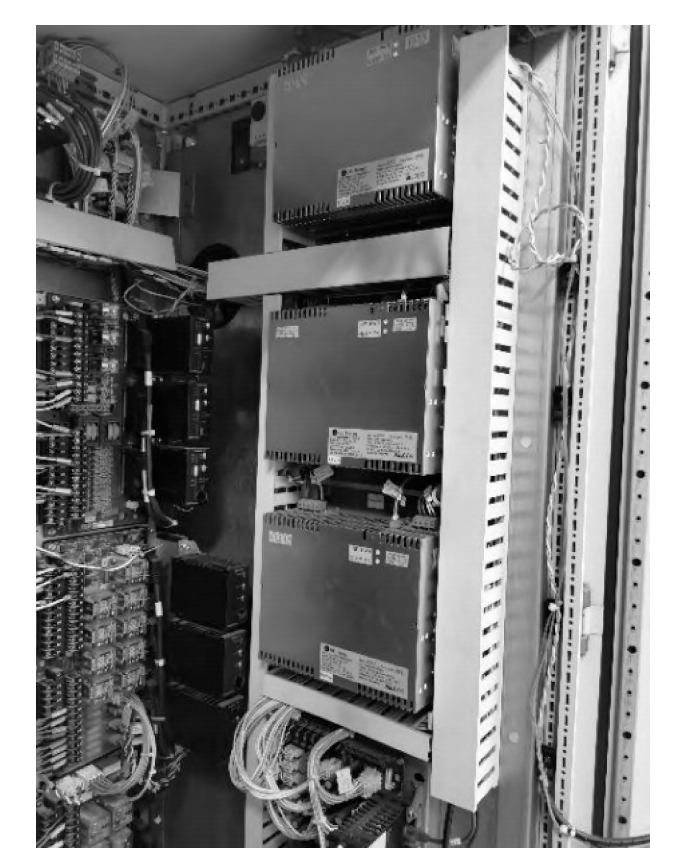
Figure 1: Addition of DACA Conversion Module
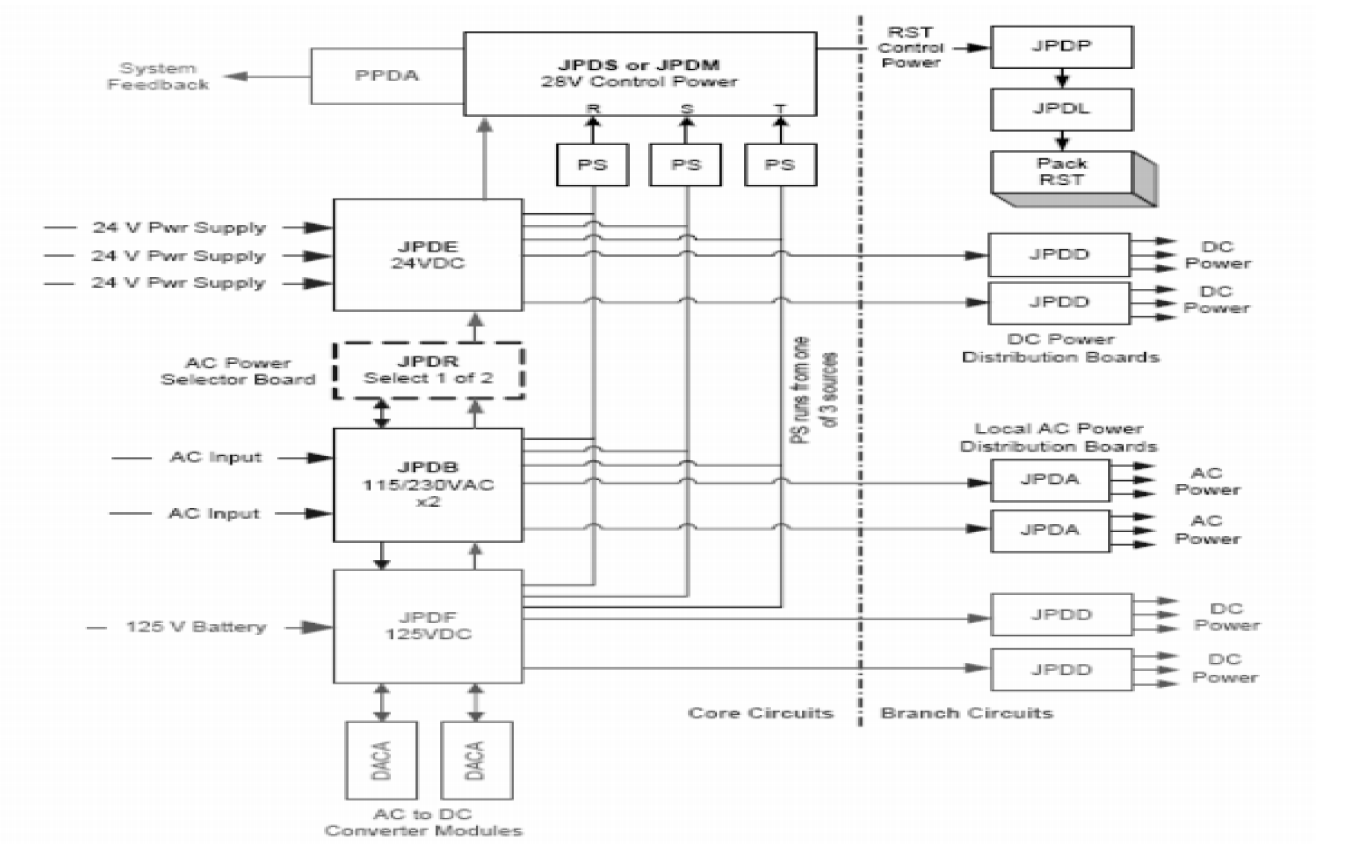
Figure 2: Power Supply System Wiring Diagram
2.3 Establishment of an Integrated Control Platform for the Coal Compressor and Gas Turbine
To support the recent adjustments to the unit's coal compressor control system, the original GE Fanuc PLC control systems—previously utilized for the two coal compressors—have been comprehensively upgraded to the triple-redundant Mark VIe control system. All existing PLC control cabinets were replaced with and reinstalled as brand-new Mark VIe cabinets. Consistent with the gas turbine system, the controllers now utilize the latest UCSC controllers, and the I/O modules have been reconfigured according to signal type (analog/digital). The control programs were rewritten using ToolboxST—the dedicated configuration software for the Mark VIe—to replicate and implement the original functional logic, including surge control.
By utilizing the Mark VIe's UDH network channels, the coal compressor controllers and gas turbine controllers have been integrated into a single control domain. Network redundancy is achieved via the EGD (Ethernet Global Data) protocol, thereby ensuring reliable communication between the coal compressor and gas turbine control systems. Concurrently, the HMI monitoring screens for the coal compressor have been deeply integrated with the gas turbine control system and centrally deployed to a single operator workstation. Operating personnel can now seamlessly switch between interfaces within a single workstation to execute a comprehensive range of operations—including gas turbine startup/shutdown, load regulation, and power setting; coal compressor anti-surge control adjustments and performance curve tracking; and coordinated interventions across the entire process flow. This enables the side-by-side comparison of critical parameters on a single screen, thereby enhancing operational efficiency and ensuring the safe and efficient operation of the unit.
2.4 Enhancing the Communication Network
The three-tier network architecture of the Mark VIe control system—comprising the PDH (Plant Data Highway), UDH (Unit Data Highway), and I/O Net—constitutes the core design of its distributed control framework. Each tier serves a distinct function while working cooperatively to ensure the efficiency and reliability of industrial control operations.
Leveraging this control system upgrade, the network architectures for both the gas turbine and the compressor control systems were simultaneously optimized to resolve pre-existing network issues. This optimization included the upgrading of I/O Net switches: the N-tron I/O Net switches originally utilized by this unit were prone to failure under poor heat dissipation conditions, which subsequently led to operational anomalies within the unit. As part of this upgrade, all I/O Net switches were replaced with the latest models to enhance the stability of the system network.
Concurrently, OPC communication capabilities were enhanced—in conjunction with the LCI, Excitation, and DCS systems—through the adoption of EGD. By configuring the OPC server via ToolboxST, real-time data from the Mark VIe system is mapped to the DCS database, thereby enabling seamless data exchange between the Mark VIe system and the DCS control systems for the Heat Recovery Steam Generator (HRSG) and the steam turbine. The start-up and shut-down logic for the LCI is written into the Mark VIe's sequential control program via OPC, triggering the automatic engagement of the Excitation system. Feedback signals from the Excitation system are also uploaded to the DCS in real-time via OPC, facilitating coordinated control.
Devices such as the compressor's Bentley 3500 series diagnostic monitoring system and the generator protection panel exchange data with other systems via the PDH network layer. These devices are equipped with multiple communication ports, connecting via Ethernet cables to two separate switches to establish dual redundancy within the PDH network. The optimized and enhanced network topology is illustrated in Figure 3.
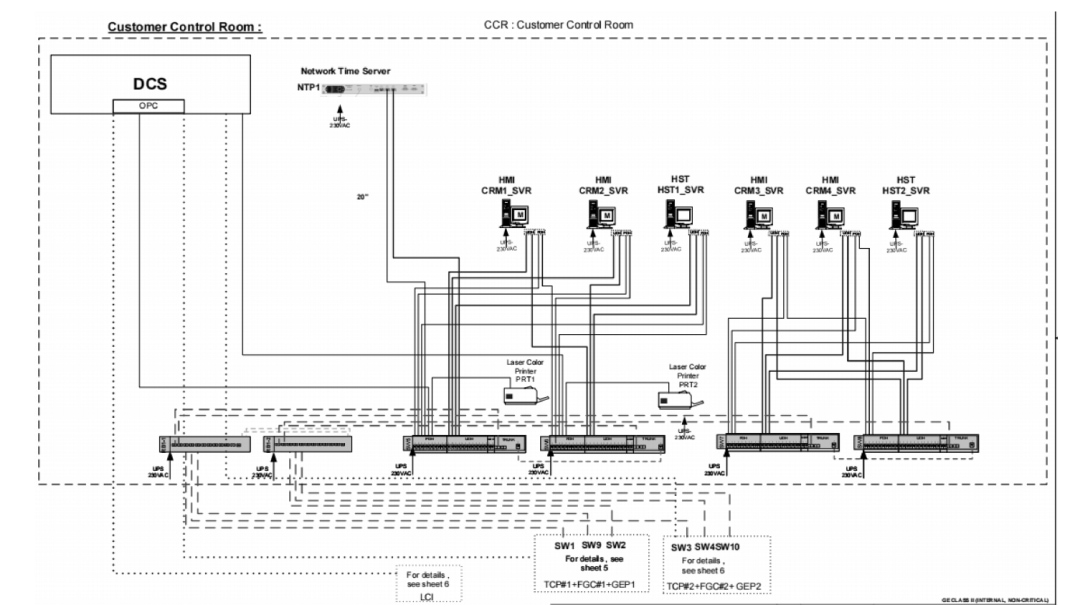
Figure 3: Network Topology Diagram
Post-Upgrade Results
The schematic diagram of the upgraded Mark VIe control system is shown in Figure 4. The comprehensive upgrade of both hardware and software has yielded multifaceted improvements in production operations. In terms of system performance, the latest version demonstrates enhancements in data processing speed and computational efficiency; it is capable of responding more rapidly to various unit operating commands and processing complex control logic in real time, thereby providing robust computational support for the unit's efficient operation.
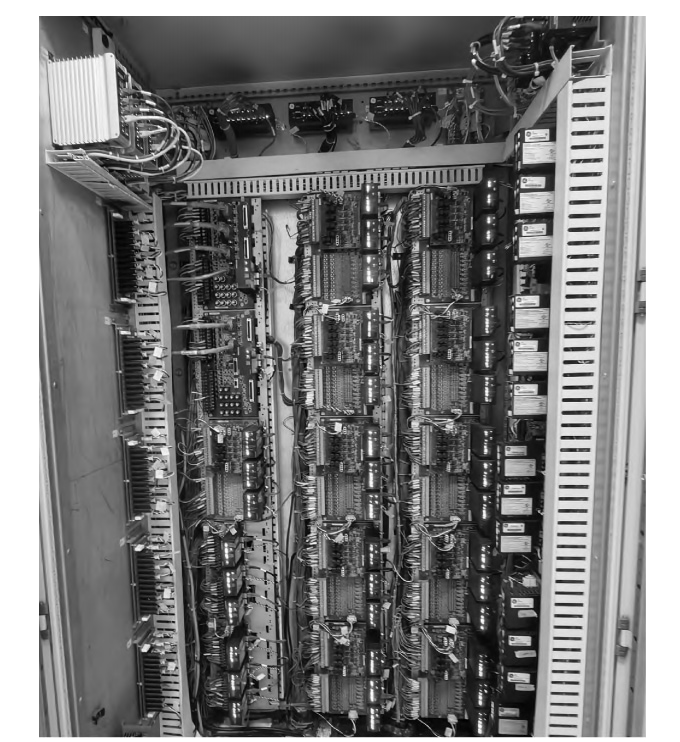
Figure 4: Mark VIe Control System Diagram
In terms of functional scalability, the new system version features a greater number of reserved interfaces and functional modules, enabling seamless integration with newly added monitoring devices, control components, and similar equipment. This capability meets future requirements for unit upgrades or functional expansions, thereby extending the overall lifecycle of the system.
Regarding stability and reliability, the controller has undergone optimized design to enhance its anti-interference capabilities, ensuring more stable performance when contending with voltage fluctuations, environmental electromagnetic interference, and similar conditions. Concurrently, the latest system version addresses potential vulnerabilities present in previous iterations, mitigating the risk of faults stemming from system defects and further guaranteeing the continuous, stable operation of the unit.
Furthermore, the new system’s operational interface is more closely aligned with the working habits of operations and maintenance (O&M) personnel. The newly introduced Alarm Pareto function enables precise information filtering based on alarm frequency, significantly boosting the efficiency of alarm management. Additionally, the intelligent management capabilities of the UCSC controller streamline operational workflows, facilitating parameter configuration, status monitoring, and fault diagnosis for personnel, thereby enhancing overall O&M efficiency.
Conclusion
By upgrading the original Mark VIe system to the latest version—encompassing the controllers, I/O cards, power supply systems, HMI operator stations, and network infrastructure—compatibility with the newest Mark VIe controllers is achieved. This upgrade effectively resolves critical issues inherent in the legacy control system, such as CF card failures in UCSA-type controllers, high rates of communication dropouts, a lack of compatible spare parts for I/O cards, and faults within the 125V DC power supply. Simultaneously, the replacement of the original GE Fanuc hardware resolves residual network communication issues within the legacy system, enhancing overall system compatibility. Moreover, this transition significantly reduces the required inventory of spare parts—specifically controllers and I/O cards—thereby lowering operational complexity as well as usage and maintenance costs. The hardware utilized in this latest control system represents the most current market configuration; it boasts high reliability, robust computational processing power, and superior fault diagnostic capabilities, all of which contribute to enhanced control stability and a reduced workload for maintenance and overhaul activities. Following a period of stable operation, the system has successfully achieved its intended objectives, ensuring the long-term, smooth, and safe operation of the combined-cycle power generation unit.
Address : Unit 1904, No.96-2 Lujiang Road, Siming District, Xiamen
Phone/WhatsApp/Skype : +86 18060982349
E-mail : sales6@nseauto.com